General affidavit: format, wording, when it needs a notary
The parts every general affidavit needs, a sample you can follow, the verification wording, the stamp, and when it must be sworn before a notary or oath commissioner.
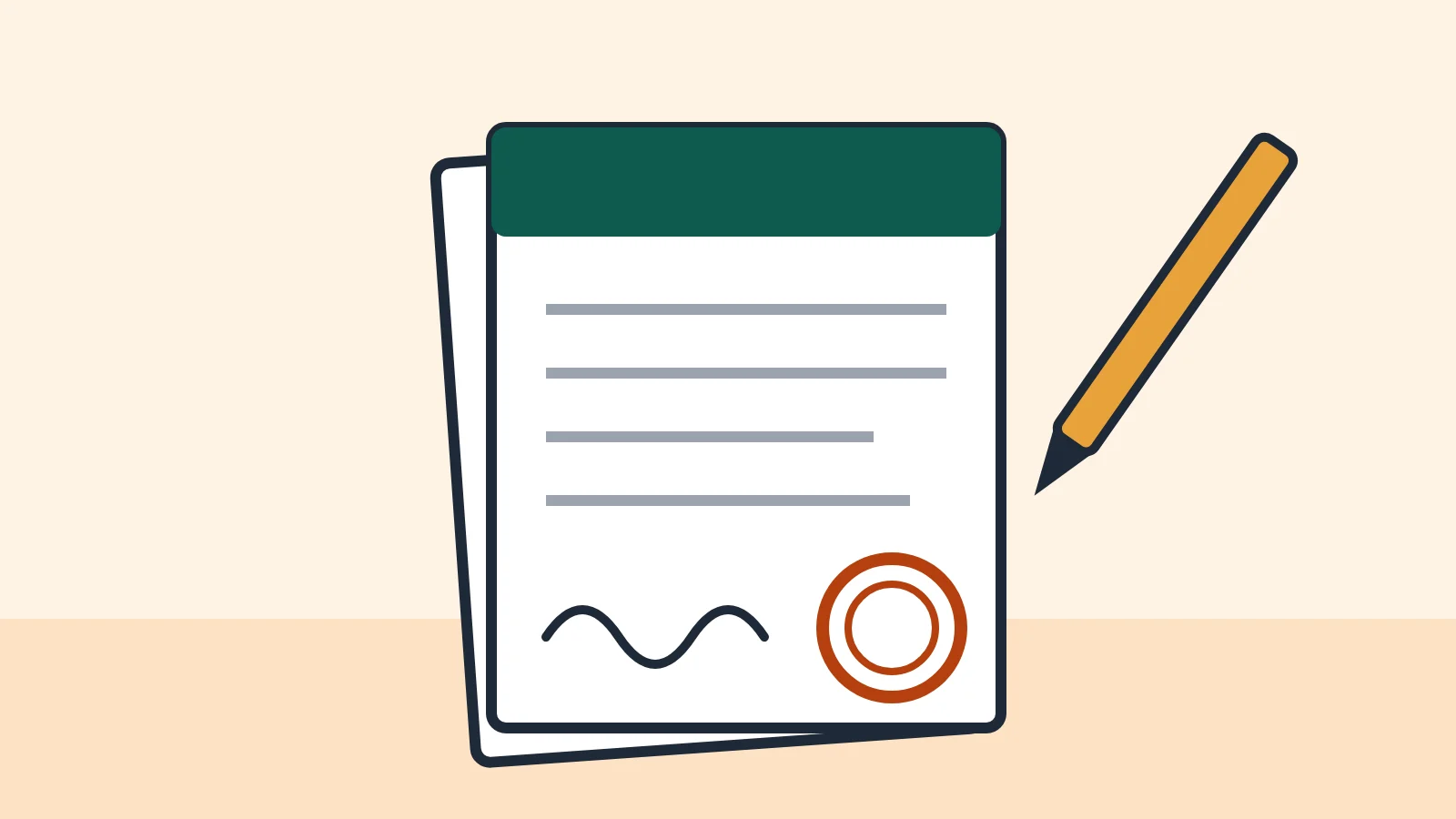
- ✓A general affidavit has six parts: a heading, who you are, the numbered facts, what it is for, the verification, and your signature with place and date.
- ✓Every fact must be one you can stand behind. A false statement in an affidavit is an offence under the Bharatiya Nyaya Sanhita.
- ✓A stamped, signed affidavit is enough for many offices. An affidavit for a court, or for an office that wants it sworn, goes before a notary or an oath commissioner.
What an affidavit is
An affidavit is a written statement of facts that you sign and declare to be true. The person making it is the deponent. The General Clauses Act, 1897 says "affidavit" includes an affirmation or declaration, for people the law allows to affirm instead of swearing (Section 3).
A general affidavit is one you make for an office or an application, not for a court case. Common uses: a change of name or address, a date of birth, a lost document, a name spelled differently on two IDs, your income, your marital status, or your relationship to someone.
The format, part by part
- Heading. "AFFIDAVIT", and if the office wants it, what the affidavit is for ("Affidavit for change of address").
- Who you are. "I, [full name], son / daughter / wife of [name], aged [age] years, residing at [address], do hereby solemnly affirm and declare as under:". Use your name and address exactly as on your ID.
- The facts, numbered. One fact to a paragraph. Give names, dates and numbers. Write only what you know to be true.
- What it is for. A paragraph saying who the affidavit is for and why: "I make this affidavit to give to [office] for [purpose]."
- Verification. The statement that the contents are true, with the place and date.
- Signature. Your signature, or Aadhaar e-sign, above the word "Deponent". If it is sworn, the notary or oath commissioner adds their attestation, signature and seal below.
The affidavit goes on stamp paper of the value your state requires, or carries an e-stamp certificate.
Sample general affidavit
AFFIDAVIT
I, [Full name], son / daughter / wife of [Name], aged [Age] years, residing at [Full address], do hereby solemnly affirm and declare as under:
- That I am a citizen of India and the deponent of this affidavit.
- That I have been residing at the above address since [Month, Year].
- That my earlier address was [Earlier address], where I resided until [Month, Year].
- That my name is recorded as [Name as on ID 1] in my [ID 1] and as [Name as on ID 2] in my [ID 2], and both names refer to me, one and the same person.
- That I make this affidavit to give to [Name of office] for [Purpose].
Verification
Verified at [Place] on [Date] that the contents of paragraphs 1 to 5 of this affidavit are true and correct to my knowledge, and nothing material has been concealed.
[Signature] Deponent
Replace every bracket. Remove any paragraph that does not apply to you. Do not add a fact you cannot back with a document or your own knowledge.
When it needs a notary or oath commissioner
For a court, the law says who may take the affidavit. For criminal courts, Section 333 of the Bharatiya Nagarik Suraksha Sanhita, 2023 names a judge or magistrate, an oath commissioner appointed by a High Court or Court of Session, and a notary. For civil courts, Section 139 of the Code of Civil Procedure, 1908 names the court or a magistrate, a notary, and officers appointed by the High Court or another empowered court. An affidavit for a court case is usually prepared by your advocate in that case.
For an office, it depends on the office. Many accept an affidavit that is stamped and signed. Some ask for one sworn before a notary. The Notaries Act, 1952 allows a notary to administer an oath and take an affidavit (Section 8); it counts as a notarial act only when done under the notary's signature and official seal. Ask the office before you start.
How to make one, step by step
- Ask the office what the affidavit must say, the stamp value, and whether it must be sworn.
- Collect the facts and your ID, and write down names and numbers exactly as on your documents.
- Draft it in the six parts above, one fact to a paragraph.
- Stamp and sign it. With eMunshi you answer the questions in about four minutes and read the full affidavit free before you pay. The e-stamp for your state is attached, and you sign with an Aadhaar OTP on your phone. The signed PDF comes on WhatsApp and email.
- Swear it if required. Take the printed affidavit and your original ID to a notary or oath commissioner.
Timeline and costs
| When | What | Who pays |
|---|---|---|
| About 4 minutes | Affidavit drafted, e-stamped and Aadhaar e-signed | You: ₹499 with eMunshi, plus your state's stamp duty, shown before you pay; two revisions included |
| Optional | An independent advocate from our panel reads it before you sign | ₹499 |
| If the office wants it sworn | Notary or oath commissioner | Their fee |
Mistakes that sink people
- A fact you are not sure of. If you are bound by an oath to tell the truth and knowingly state something false, the Bharatiya Nyaya Sanhita calls it giving false evidence (Section 227). The punishment can be imprisonment of up to three years and a fine, and up to seven years in a court case (Section 229).
- Names that do not match your ID. Copy them letter for letter.
- Several facts in one paragraph. Number them so the office can check each one.
- No purpose stated. Some offices reject an affidavit that does not say what it is for.
- Hand corrections after signing. Make a fresh affidavit instead.
If your affidavit is for a pending court case, an independent advocate from our panel can prepare it as part of that case; a 30-minute call starts at ₹999. For consent or a promise rather than facts, see the NOC and undertaking pages, or which one you need.
Questions people ask
What is a deponent?
The person making the affidavit and declaring that its contents are true. In a general affidavit, that is you.
Does every affidavit need a notary?
No. Many offices accept an affidavit that is stamped and signed. An affidavit for a court case, or for an office that asks for one sworn in person, must be sworn before a person the law allows to take it, such as a notary or an oath commissioner. Ask the office first.
What is the verification at the end?
A short paragraph in which you declare that the contents are true and that nothing material has been hidden, with the place and date. For affidavits used in criminal courts, the law also asks you to keep separate what you know yourself from what you believe, and to give the grounds of your belief (Section 333 of the Bharatiya Nagarik Suraksha Sanhita).
Can I write the affidavit on plain paper?
Offices usually want it on stamp paper or with an e-stamp attached, because the Indian Stamp Act lists an affidavit as a document that carries duty. Your state sets the amount.
Is an Aadhaar e-signed affidavit accepted?
For most uses, yes. Section 5 of the Information Technology Act, 2000 treats a signature requirement as met by an electronic signature affixed in the prescribed manner. If the office wants an affidavit sworn in person, print the e-signed copy and take it to a notary.
What if I made a mistake in an affidavit I already gave?
Make a fresh affidavit with the correct facts, say in it that it corrects the earlier one, and give it to the same office. Do not alter a signed or sworn affidavit by hand.
Need an affidavit, NOC or undertaking todayGuide No objection certificate: formats for society, employer, bank, RTO, spouseFormatWhich document do I need?Tool
 Power of attorneyGet an advocateGeneral affidavit — ₹499DocumentNo objection certificate — ₹499Document
 Undertaking — ₹499Document
Updated 26 October 2026 · Awaiting review by a panel advocate · General information, not legal advice for your specific matter.